



On the detrimental lack of interdisciplinary discourse in (herbal) science: A podcast invitation
Recently I was interviewed by Stephanie Hazel on the Elder Tree podcast. Originally, she approached me with a topic of skin and sensuality. However, after a phone call during which we got all excited about science and its role in herbalism, we decided to center the episode around that topic instead. Stephanie's segment on the Elder Tree podcast is called “Sacred Herbalism”, so bringing science into it sounds almost counterintuitive. Indeed, most of her previous conversations on this podcast are dismissive of science. But dare-I-say that it was precisely this contrast that we found intriguing.
As someone who is familiar with science from the "inside" yet works at its intersection with traditional and embodied ways of learning, I was able to share views of science that are less common amongst herbalists. Views that may be unpopular yet invite us to stretch our minds and soften our rigid beliefs.
This was my first public dialogue on this topic, and I look forward to refining these conversations in the following months and years. This article is written as both, a broad summary of my conversation with Stephanie and a refinement of some of the topics we had covered. You can listen to the unfiltered and improvised chat here: Elder Tree podcast: In Defence of Science with Kaja Skraskova
3 forms of science
While the podcast episode is called “In Defence of Science”, you will actually hear me criticizing it a lot. So, what am I actually defending?
It is important to understand, that when I talk about science, I distinguish its three following forms:
- An endeavour,
- Academic research, and
- Political institution / authority
It is the latter two that I openly criticize, and the former that I defend to a certain degree. You will hear me talking about the enthusiasm and pleasure of finding how things work, and about putting the learnt in a context and a good use. That’s the side of science that’s worth preserving, not abandoning, as far-right politicians would like you believe. They conflate public’s criticism of science as authority, and use it to lure people into their midst. But believe me, you don’t want to go there.
In the podcast I point out how science has been misused by capitalism and technocrats and how this mutilated form of science deviates from its original purpose as a method of free (yet systematic) inquiry.
I have experience with scientific research in many forms. I have worked in:
- Academia (i.e. University-led research)
- Governmental research institute (where I did my PhD)
- Huge pharma firm (I technically did not work there apart from a short internship, yet it was eye opening.)
- Private research company (which I founded with my husband), and
- As an independent scientist/researcher
The freedom to contextualize has been apparent in the latter two experiences. So, in the podcast you will also hear me elaborating on “what’s wrong with the Academic science”.
Science and/or intuition
I actually rarely speak of myself as a scientist. I prefer to call myself a researcher (or even an "experimental philosopher", which is an old-fashioned description for a scientist). I prefer "researcher" because in my mind, that word stays open to other modalities of discovery other than the scientific method. In the podcast you will hear me talking about the importance of balancing the scientific method with intuition and embodied investigation.
However, contrary to how scientists are presented in the media, many of them do work with an element of intuition and surprise (maybe not your average academic, but certainly all the respected figures I mention in the podcast worked with intuition as a research modality).
Additionally, scientific investigation can be very much embodied as one gets their hands dirty to collect valuable data (sometimes literally). I also feel compelled to mention here that “reading research publications” is not the same as “doing science”. As to how to competently interpret scientific studies… that is hard without the experience and training. I mean, you would not want to interpret a blood or stool test without having the expertise either, would you?
The most important piece of advice? Have interdisciplinary conversations! Ask the questions, reach out with them to people who come from different fields, share your perspectives.
Herbal science is not limited to clinical studies
The last thing I want to elaborate on in this article is the conflating of herbal science with clinical studies. Herbal science is so much more than that!
And here are just 10 examples:
- Analysing and quantifying herbal constituents in herbs and their extracts? = Analytical chemistry = Herbal science
- Determining their safe levels? = Toxicology = Herbal Science
- Studying solubility of herbal constituents which governs the selection of appropriate solvents? = Basic chemistry = Herbal Science
- Exploring and documenting the traditional uses of herbal medicine? = Ethnobotany = Herbal science
- Exploring nutritional effects of herbal extracts / constituents? = Biochemistry = Herbal Science
- Incorporating herbal extracts into skin care products in a stable and safe way? = Cosmetic chemistry = Herbal Science
- Testing essential oils and herbal materials for adulteration? = Analytical chemistry = Herbal Science
- Calculating concentration/strength of herbal extracts? Arithmetic, algebra = Herbal science
- Determining the actions of herbal constituents? = Pharmacology = Herbal science
- Determining dermal absorption rates? Dermatology + Analytical chemistry = Herbal science.
In my view, the lack of interdisciplinary discourse is far more damaging to the reputation herbal science than clinical studies that do not align with traditional herbalism. This is a thread that you will find running through my whole conversation with Stephanie. If you do listen to it, let me know your thoughts – true to my belief that the best way to keep each other in check is through the art of a respectful discussion, I am so keen to expand on this conversation. I write more about herbalism and science here.
Read more
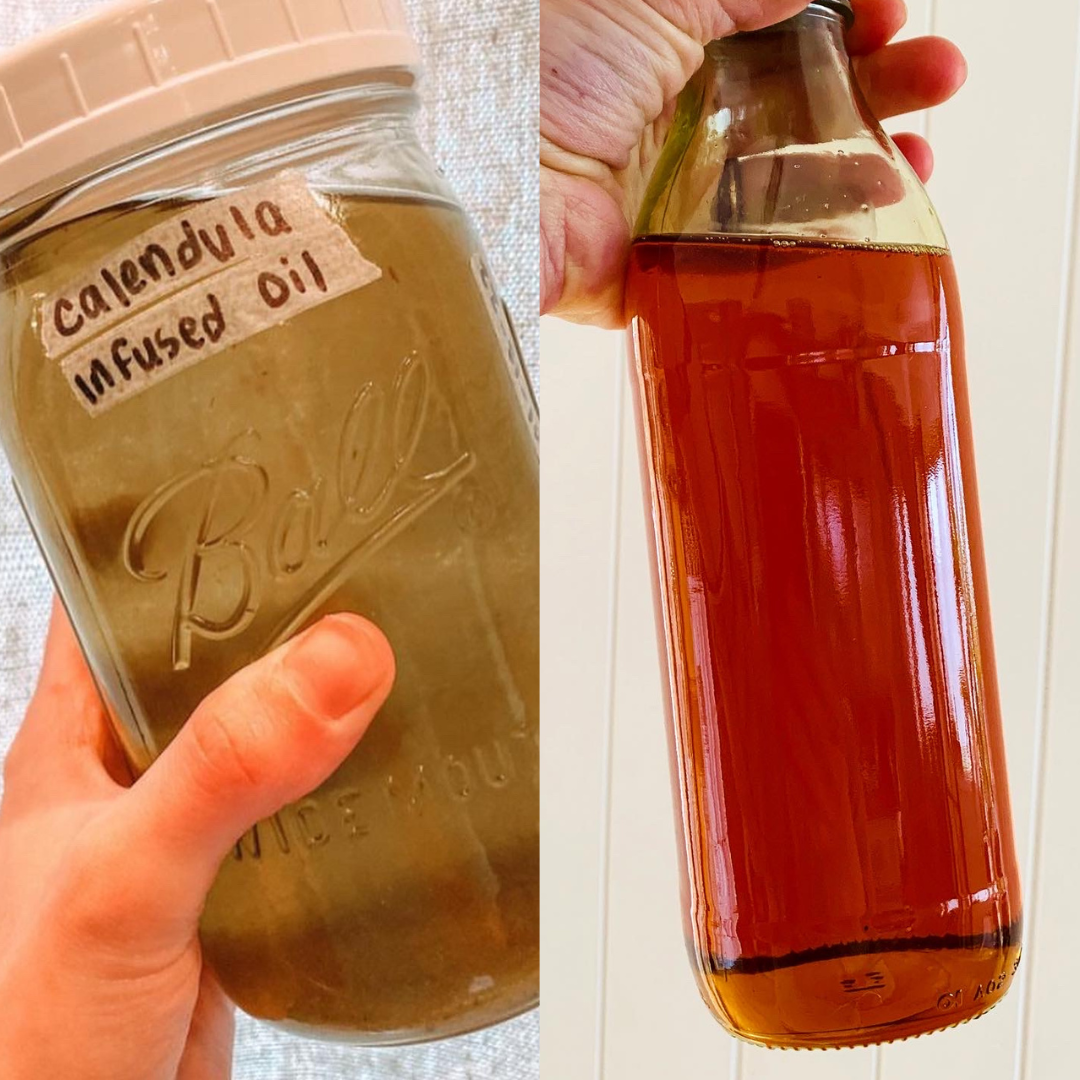
How to spot low quality herbal extracts in botanical skin care: 6 warning signs
Once I overheard a significant figure in the botanical skin care industry claiming that “some commercial botanical extracts are transparent (i.e. lack colour), because they are filtered during manu...
Read more
Pairing botanical oils with herbal constituents for herbal skin care
What herbal constituents get extracted into herbal infused oils? I have been pondering this question for a long time. “But you have a PhD in chemistry – shouldn’t you be able to figure this out?!” ...
Read more