



Castor wax and jojoba oil: How understanding cosmetic chemistry can save your botanical skin care formulations
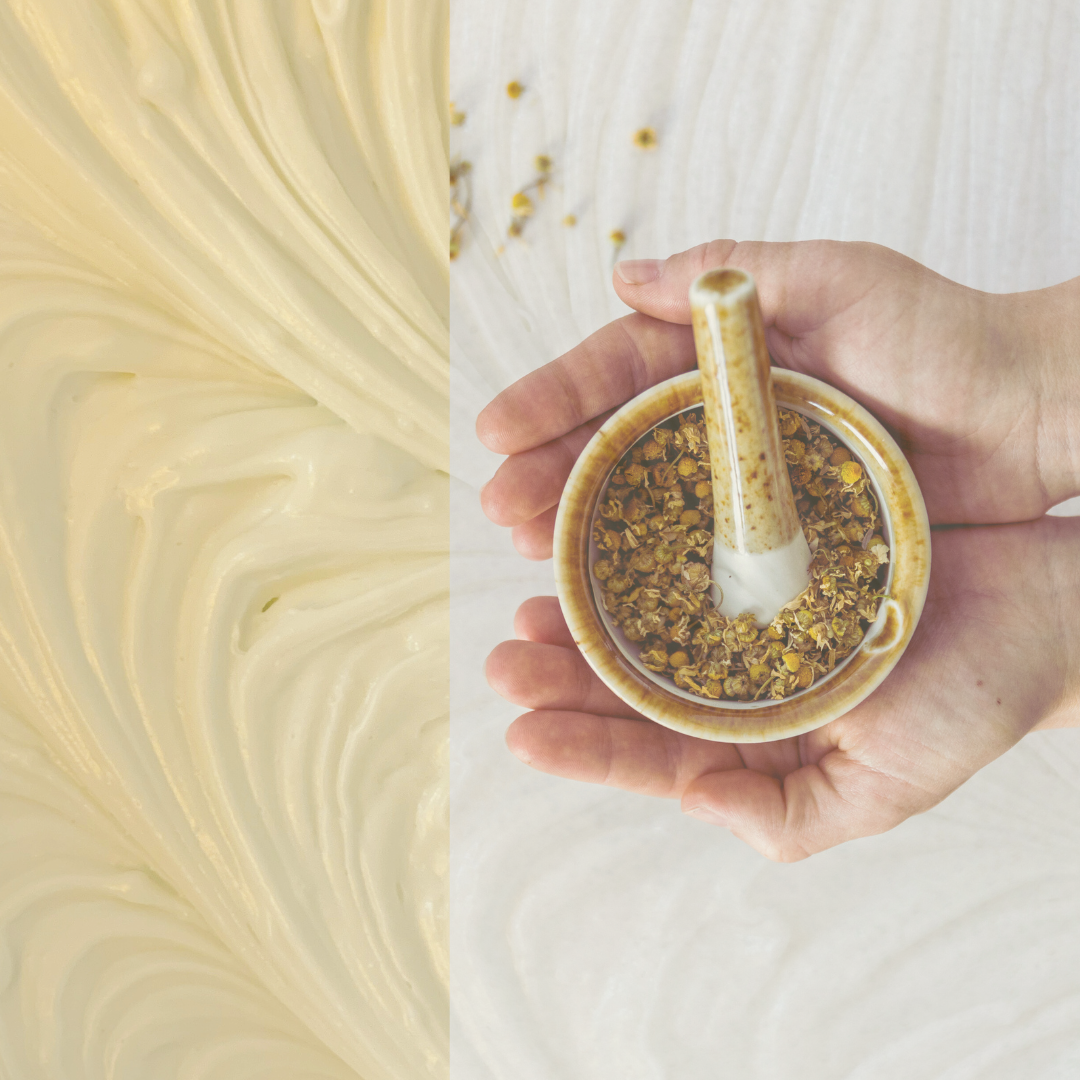
If I told you that the oil on the left is not an oil but an actual wax, you may recognize it as jojoba oil. Indeed, from its chemical structure perspective, jojoba oil is a wax. It is not composed of triacylglycerols (i.e. esters created by three molecules of long-chain fatty acids and one molecule of glycerol), as "normal" botanical oils would be. Instead, its main structural component are esters where one molecule of fatty acid is bound to one molecule of long chain fatty alcohol. Because most of its esters contain an unsaturated fatty acid, jojoba wax is liquid and behaves more like an oil.
But only to a certain degree.
Jojoba oil as a wax
For example, in soap making, jojoba oil yields different byproducts during the so-called saponification process, than “real” oils. Should soap be made only from jojoba oil, the resulting product would be unstable and vastly different from a traditional bar of soap. That’s why jojoba oil is added to soaps only in small amounts.
But I am not a soap-making afficionado, I prefer to make herbal skin care products such as creams or salves. In the latter, botanical oils are mixed with waxes to create a product with a semi-solid texture. Considering jojoba oil a wax in such a product would have “interesting” implications, too. As you can guess, mixing a botanical oil with jojoba oil will hardly result in a thick product. This is essentially the reason, why, despite its waxy chemistry, jojoba oil is called … an oil.

Castor wax: A curious wax for plant-based herbal salves
Let’s have a closer look at the second ingredient on the picture above. Contrary to jojoba oil, this one, with its white solid flakes form, does look like a wax. And it is also called so: castor wax.
Functionally, castor wax can be, indeed, used as a wax, i.e. to thicken cosmetic products. However, if you ever tried making a salve with castor wax, using it in traditional waxy amount, you may have been surprised that what you created has hardly thickened.
The reason? You guessed it: castor wax is not a chemical wax.
Instead, it is hydrogenated castor oil, i.e. it is chemically composed of triacylglycerols, which were chemically changed from unsaturated (as they would be present in castor oil), to saturated.
You have to use about double the typical wax amount of castor wax in a salve formula, to make it thick. Disappointingly, however, the resulting product will feel so gritty on your skin or lips, that you will quickly return to more traditional waxes.
So, chemically, jojoba oil is a wax and castor wax is a fat (“saturated oil”). Functionally, however, jojoba oil is indeed an oil while castor wax can be considered wax. But only to a certain degree as both will behave uniquely and differently from actual chemical waxes and fats.
The importance of actually understanding cosmetic chemistry
Some may consider this nitpicking. Some skin care teachers will try to convince you that you don’t need to understand relevant chemistry principles when learning how to make botanical or herbal skin care. Sure, you may not NEED to, you may be happy knowing that jojoba oil is a wax and castor wax is a fat. However, when you actually take the time to learn and understand basic cosmetic chemistry, a whole new world is going to open up for you:
- Gone will be the need to memorize stuff that does not make sense.
- Gone will be the need to re-learn basic concepts from scratch, when they are introduced under different circumstances.
- Gone will be the confusion and surprises that a formula did not work.
In other words, understanding the chemistry principles is what can make a difference between a good and an excellent skin care maker.
Learn step-by-step without the overwhelm
To help you feel more grounded and confident in your experience of herbal skin care crafting is one of the reasons why I place so much emphasis on teaching basic (cosmetic) chemistry principles and technical details in my courses. Not to overload you with information, not to nitpick.
But to re-awaken the sense of curiosity, awe and deep empowering understanding.
When teaching about herbal salves and balms making in the upcoming third Module of Oily Craft, I will insist that you take a good look at chemical structures of oils and waxes. You may not remember this for all eternity, but treat this information as a planted seed, which will crack the ground next time you wonder why your salve did not quite work out when you used that new plan-based “wax”.
And this of course, is but one tiny example of what we will explore together.
Read more

Pairing botanical oils with herbal constituents for herbal skin care
What herbal constituents get extracted into herbal infused oils? I have been pondering this question for a long time. “But you have a PhD in chemistry – shouldn’t you be able to figure this out?!” ...
Read more
Knowing your chemistry and understanding ingredients & manufacturing methods is incredibly empowering and helpful on your herbal skin care making journey. It gives you an advantageous starting ...
Read more