



Emulsified Lavender Sugar Scrub: Story of a genuine formulation f*ck up and the right formulating mindset
Knowing your chemistry and understanding ingredients & manufacturing methods is incredibly empowering and helpful on your herbal skin care making journey. It gives you an advantageous starting position, saving you time, money and nerves.
Formulating skin care is a deeply hands-on experience: the more you do it, the better you become at it. Sometimes you simply don’t know how a formula will feel and behave until you make it. Other times you have to make it a few times to discover the problem is in manufacturing strategy rather than the ingredients. Having that foundational knowledge helps you understand why sometimes things don’t quite work out.
What’s missing in the herbal skin care formulation space
Recently, my attempt at improving a tested herbal sugar scrub formula by "emulsifying it" in one simple step took a disappointing turn. Rather than crying over the proverbial spilt milk behind closed door, I decided to do something useful: to share about it.
The internet is full of fool-proof botanical skin care formulas, designed by creators who guarantee success when following their instructions. But what is lacking in the online space are all the f*ck-ups that preceded that one publishable formula and, in fact, made it achievable. (It’s like the “Academia-mentality”: researchers publishing only results of “successful experiments”. You never hear about things that did not work!)
And so here it is: my unfiltered lavender sugar scrub f*ck-up.
What are sugars scrubs
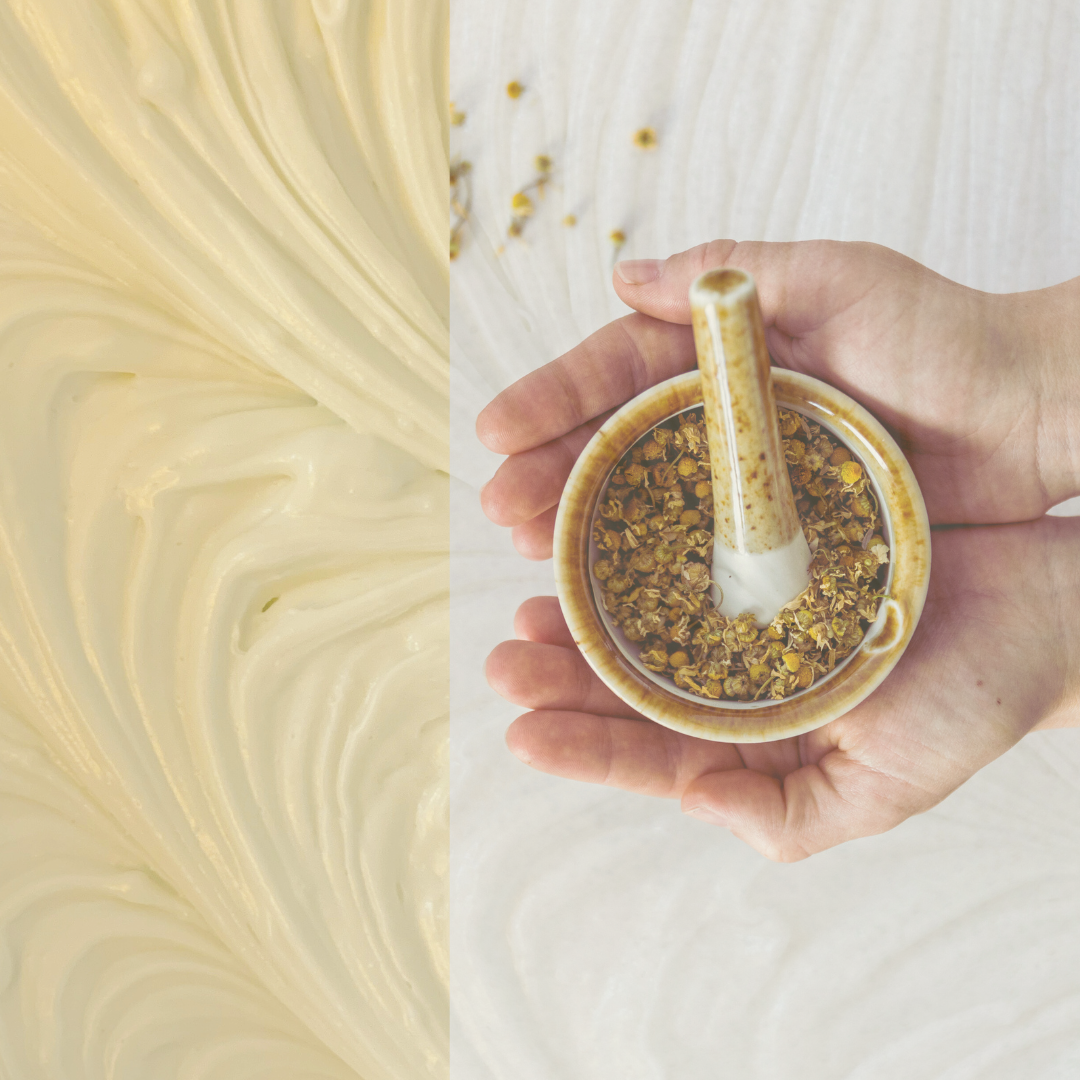
While sugar scrubs were a real hit a few years maybe a decade ago, their variations still circulate in the DIY skin care making community. They are typically an oil-based skin care product containing a big proportion of botanical butters (like shea or mango), which are whipped with a selection of botanical oils to create a fluffy nest for a dose of granulated sugar. The product is applied in the shower, with the sugar acting as a gentle exfoliant, gradually dissolving. Meanwhile the butters and oils are meant to moisturize the skin.
In their basic form, sugar scrubs remain in the DIY skin care realm, rather than turning into products that a professional cosmetic chemist would formulate. This is due to their fickle stability and the fact they often leave a greasy residue on the shower floor and can be actually rather difficult to wash off.

Emulsified sugar scrubs
To avoid the two latter issues, some formulators create “emulsified” sugar scrubs. As you can easily deduct from their name, these products feature an additional emulsifier, which (at least in theory) allows the oils and fats in the sugar scrub to emulsify upon contact with water, creating a layer that is way easier to wash off the skin.
To be honest, sugar scrubs are not my specialty (I focus on the formulation of more therapeutic rather than relaxation products), but I was confident I can pull this off with a simple experiment. If successful, I was planning to feature the formula in my upcoming online course: Oily Craft, alongside several of my original herbal skin care creations.
Because Oily Craft does NOT cover emulsified products, I wanted to make the sugar scrub as simple as possible by creating a cold-processed formula that would need minimal explanation of the emulsification process.
Risky emulsifier choice
As an emulsifier, I selected for a combination of sorbitan oleate and polyglyceryl-3 polyricinoleate, which is commercially sold under “Arlacel 1689” or “Trumulse 1689”, with which I had worked before. This ingredient is used as a water-in-oil emulsifier, which can be added into cold-processed formulas, because it is liquid at room temperature. I knew that leaning into this ingredient was a bit risky.
While showering, we mix a rather large amount of water with the applied product, and an oil-in-water emulsifier would be more appropriate. But I was set on trying this out. I have combined the shea butter with oils and a little of the chosen emulsifier to create a perfect fluffy home for the granules of sugar. The product looked and felt great on the skin. The problem started when I went to wash it off.
It just would not budge! Instead, I was facing a thick white greasy layer on my forearm.

In my classes, I teach about a formulator’s mindset. When something does not work out:
1. Don’t panic.
2. Take a break, have a drink or maybe a snack.
3. Sit down and work through your formula step by step.
4. Write it down and compare with your old notes.
5. Follow the principle of Ockam’s razor: “The simplest explanation, requiring the fewest assumptions, is usually the best one when faced with competing hypotheses.”
Now I had to eat my own medicine.
After a little pause, I tried to get to the bottom of the problem by trying a few formulation changes. The main suspect was the emulsifier. In one of the follow up experiments I tried ramping its amount in the formula and… the white greasy layer doubled in its persistence, confirming my culprit!
Morale without a traditional happy ending
This story does not have a traditional happy ending materializing as the perfect emulsified sugar scrub. I simply did not want to go off on that tangent. For the time being, I decided to drop the topic, because firstly, I am not that interested in them, and secondly, I have tens of other herbal skin care formulas that I can select for Oily Craft (not to mention hundreds of others that I would rather explore.)
The morale of the story is, that:
1. Sometimes things don’t work out and that’s ok.
2. We often learn more from “mistakes” than when things go to plan.
3. It can be very empowering confirming a theoretical knowledge in practice, even (or especially!) when it does not work.
4. You don’t need to figure out everything straight away. Tackling a problem at a later stage is perfectly fine. Just document it and get back to it when it calls you.
5. The learning never ends!
Invitation to learn more
In the third module of Oily Craft, I lean heavily into this herbal skin care formulator’s mindset, which will help you experiment with more confidence and patience. In this final module of the online series, I will guide you step-by-step through 6 oil-based herbal skin care formulas, featuring not only their ingredients and successful crafting methods, but also the ways they could go wrong and how to avoid or troubleshoot it.
These are the formulas I will share about (alongside all the foundational knowledge):
- First aid sage and yarrow salve with zinc oxide
- Rich herbal ointment with moringa and castor oil
- Fragrant calendula & lavender salve with sunflower wax
- Calendula & Chamomile stick lip balm
- Decadent herbal body butter - 2 ways
Read more

If I told you that the oil on the left is not an oil but an actual wax, you may recognize it as jojoba oil. Indeed, from its chemical structure perspective, jojoba oil is a wax. It is not composed ...
Read more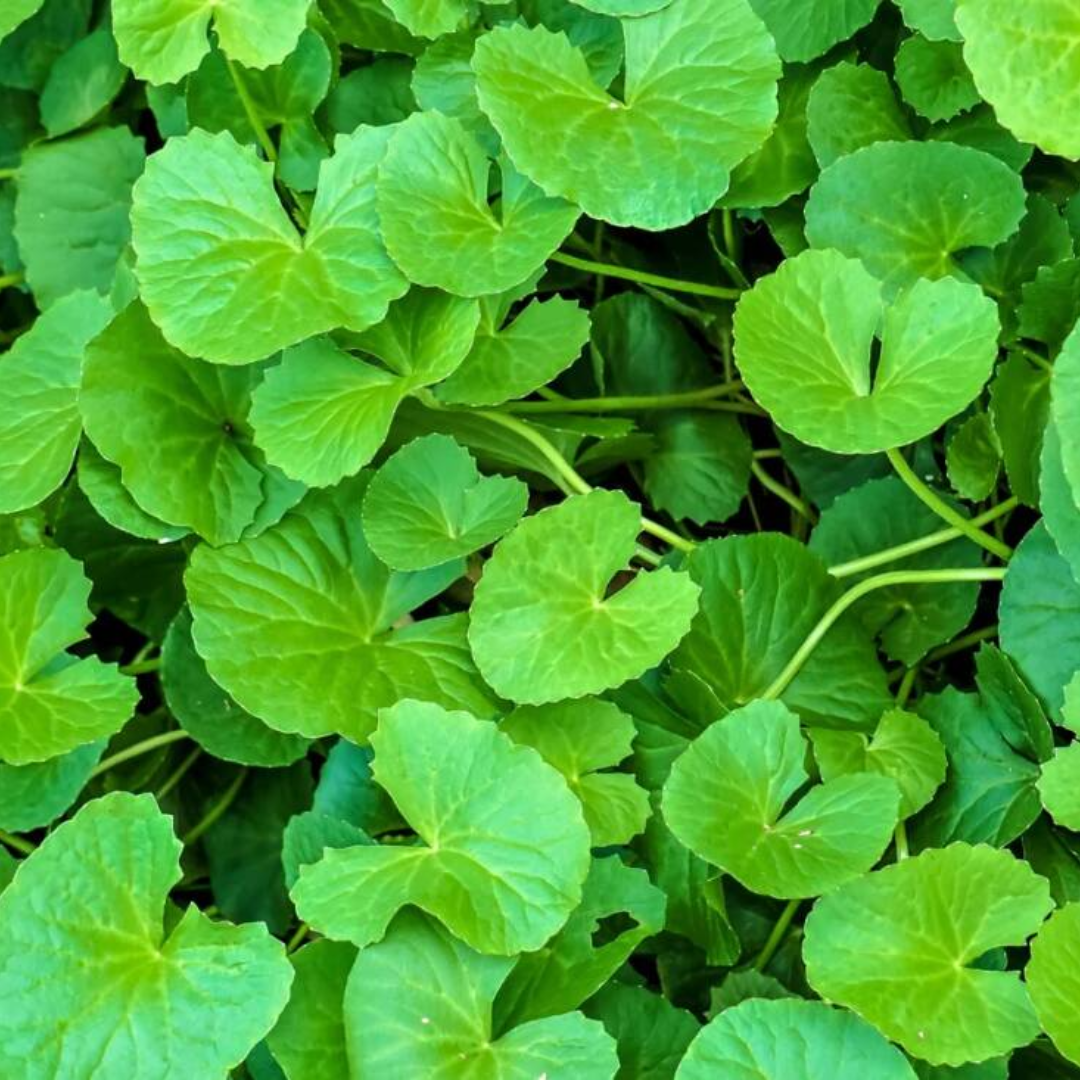
Gotu Kola in Skin Care: A Herbalist's Critique of the Reductionist View of Centella Asiatica
Recently I got a chance to listen to a short lecture on gotu kola (Centella asiatica), delivered by representatives of a global cosmetic ingredients manufacturing company. The popularity of gotu ko...
Read more