

,%20delivered%20by%20representatives%20of%20a%20global%20cosmetic%20ingredients%20manufacturing%20company.%20The%20popularity%20of%20gotu%20ko...)
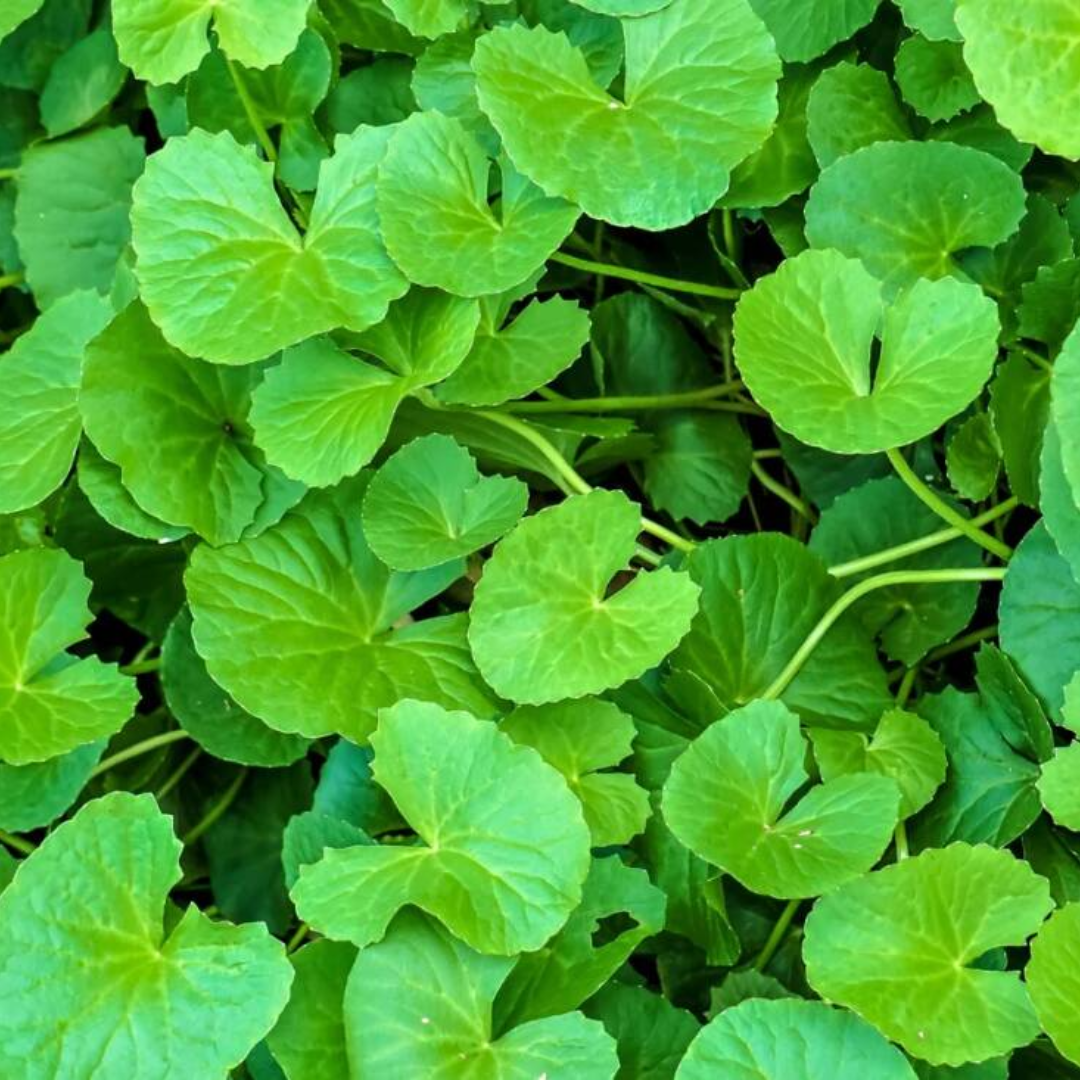
Gotu Kola in Skin Care: A Herbalist's Critique of the Reductionist View of Centella Asiatica
Recently I got a chance to listen to a short lecture on gotu kola (Centella asiatica), delivered by representatives of a global cosmetic ingredients manufacturing company. The popularity of gotu kola in the skin care industry (both “natural” and “conventional”) has been growing steadily for the past decade and is now reaching its all-time high. Surely, one of the reasons why this company marketed its line of Centella extracts to a large audience of cosmetic formulators.
I anticipated the (intended) “advertising style” of the lecture. Yet, I was close to shocked by how crudely and dispassionately the information was delivered. Despite my awareness of the issues “global herbalism” poses, I came out the other end somewhat frazzled. These were my major concerns:
1. Centella as a growing trend
In 2025, 34% of newly launched Korean skin care products included gotu kola (compared to 10% from ten years ago).
This only confirms the industry’s unhealthy, reductionist and unsustainable obsession with the plant, which became synonymous with skin barrier repair (rightly so) and anti-aging (meh). The overuse is driven by consumer’s demand, is driven by perpetual marketing. When an aesthetician makes a recommendation for a skin repairing serum, you can bet the product will contain gotu kola–it is impossible to miss this plant in the skin care industry.
2. Erasure of history of traditional use
“Ancient wisdom” and “traditional knowledge” were mentioned on slide two, yet the third slide, showcasing the historical overview of Centella use, started with the year 1940, when the plant was “discovered by science”.
This kind of rhetoric makes my skin crawl, despite (or should I say because of) my science background. While the science history of gotu kola may date to the beginning of the 20th century, the plant has millenia-long history of use in traditional medicinal systems across parts of Asia and Africa.
In modern herbalism and skin care, it is rightly used as a skin healing herb, able to support the skin barrier and expedite wound healing. However, its topical use reaches far beyond the skin itself. And what’s more, its skilful indication includes additional applications, such as support of the nervous system when taken internally.

3. Reduction to chemistry alone
Gotu kola was heavily reduced to its chemical components. Now, while I find the chemistry of gotu kola fascinating (more on this later), the plant is SO MUCH MORE than that. Even if you continued using language of science to expand on its curious chemistry, describing the plant from ecology, biology and historical POVs would represent a decent try at painting a more holistic picture.
Knowing the plant’s historical use, its connection to people, how it grows, where and why is not just a fancy trivia: it has direct implications on using the plant sustainably, correctly, and showing her the respect it deserves.
Any practice that takes us back to the land and its cycles is better than one that takes us away from it. Being aware of plants beyond their chemistry is one such practice.
4. Vague ethical sourcing claims
The company representatives highlighted the manufacturer’s commitment to “proper sourcing” as one of the three foundational pillars that support the efficacy of their proprietary extracts, propped by the UEBT (Union for Ethical Biotrade) logo.
However, there is an important distinction between a UEBT membership (and the commitment to improvements in ethical sourcing of botanicals) and actual certification of individual products and ingredients. After the presentation, we were still left with questions such as: Where and who do they source gotu kola from? Is it wild-harvested or cultivated? Grown using biodynamic principles or synthetic pesticides? Were the growers fairly paid for their job? etc.

5. Fascinating phytochemistry nonetheless
As a trained chemist (and a phytochemistry nerd to top it off), I loved the short description of the fine balance gotu kola keeps between its saponins and their corresponding sapogenins (think madecassoside vs. madecassic acid). I find it fascinating that each harvest may have a different ratio of these constituents based on the growing conditions or exposure of the plants to predators. This ratio is subsequently reflected in its medicinal properties. Here is a more detailed view:
Most gotu kola triterpenes are stored as glycosylated molecules. When the plant gets attacked by predators, these molecules are hydrolyzed to their corresponding sapogenins, which shift the intercellular pH within the plant tissues. Subsequently, this makes the plant less appetizing for the predators, who leave it alone. However, the hydrolysis process additionally drives a pro-inflammatory response within the plant, which is offset by the left-over non-hydrolyzed saponins and their potent anti-inflammatory effects.
This also confirms, what I found through various other references: that the content of saponins in gotu kola is typically higher than the content of sapogenins. This has direct implications for extracts making. (I teach about this extensively in Herbal Skin Craft, most notably its third Part: Herbal Extracts for Natural Skin Care). And of course, it is not just about these molecules, gotu kola is brimming with other herbal constituents too.
Extensive gotu kola profile
I understand that there was no time for more expansive information on gotu kola in this particular lecture. However, the lack of connection of the lecturers (and the company they represented) with the plant was self-evident.
This pains me, because this lack of reciprocal connection reduces precious living beings to tools for corporate profit. It’s like mistaking your best friends for “human resources”.
Obviously, not every presentation or article about gotu kola must contain all the details–as exemplified by this very opinion piece: It is not its purpose to describe gotu kola extensively. It points out the problematic commodification of herbs within the mainstream “botanical” skin care industry.
My own practice - that can be yours too
I work with gotu kola often in my products, as it is a herb that is available in my region (subtropics). I prefer to make my own extracts (or source from reputable and trustworthy fellow herbalists and small makers). I am also quietly working in the background on an extensive gotu kola class, which would do this fabulous herb proper justice within the context of skin care and topical applications.
In the meantime, you can learn about how to work with gotu kola in some of my other courses. In Full Craft, you will get the full picture of how to work this herb into a herbal cream. Meanwhile in Herbal Skin Craft (a detailed 3-part series on the art and science of tailored herbal skin care), the chemistry of gotu kola becomes more relevant through the context of other herbal constituents.
If you:
- Love crafting with herbs,
- Are ready to increase your confidence and grasp the underlying principles of both, traditional herbalism and cosmetic science,
- Are intrigued by exploring herbal skin care topics from different angles,
- Resonate with my personal and inquisitive teaching style (as testified by tens of students),
come learn with me!

---
Opinions and literary craft (as well as typos and grammar mistakes) provided by Kaja Skraskova.
Read more

Knowing your chemistry and understanding ingredients & manufacturing methods is incredibly empowering and helpful on your herbal skin care making journey. It gives you an advantageous starting ...
Read more
Can you make your own herbal skin care? An interdisciplinary point-of-view
A friend of mine (I will call her “Lisa”) shared her journey of a fungal skin infection, that she contracted on her face earlier this year. She did not talk as much about the symptoms; her story fo...
Read more