

Article: Can you make your own herbal skin care? An intersdisciplinary point-of-view
Can you make your own herbal skin care? An intersdisciplinary point-of-view
Recently, a friend of mine (I will call her “Lisa”) shared her journey of a fungal skin infection, that she contracted on her face earlier this year. She did not talk as much about the symptoms; her story focused on the product she was using on her face: her own cream.
When she shared about her product with her GP, the medical professional was apparently horrified. They essentially blamed Lisa for her own problem, told her the cream was likely not properly preserved, yielded to a fungal growth and then went on to infect her skin. They discouraged her from making her own skin care because she was not "qualified".
Not exactly tactful. And more so: suspicious!
Can skin care harm you?
There are, of course, many DIY online recipes, which can damage your skin – acutely or over time. Think
- burns from undiluted essential oils,
- irritated skin caused by improperly preserved products, or
- damaged skin barrier as a result of poorly balanced formulas (or neat lemon juice).
Of course, all that can happen to your skin, too, when you use well-made products improperly. For example,
- too many products with AHAs (alpha-hydroxy acids) in one routine
- introducing retinoids inadequately, or
- simply applying products that are too thick on a skin that calls for light functional care.

Poorly preserved skin care
But back to Lisa. She was specifically told her product was not preserved well and became contaminated with microorganisms.
Indeed, certain bacteria can grow in some skin care products without us noticing.
On the contrary, fungal (mould) growth, is usually very apparent! You will notice it as grey-ish or green-ish fluffy islands on top of your cream or as string- or cloud-like floaties in your toner. Additionally, mould growth can develop very quickly in un-preserved products.
In other words, it is very unlikely that you would end up using a mouldy cream without you noticing it is actually mouldy.
But what if you *really* didn’t notice? (For example, if the product was packaged in a pump bottle where mould growth is hard to spot?)
In that case, one of the three scenarios will likely happen:
- Nothing at all (if your skin barrier is strong).
- Irritation (if your barrier is compromised).
- Infection (if you suffer from an immune-system dysfunction or your health is compromised in other serious ways).
Skin care product suitability
At the time of using, my friend’s skin barrier was a little compromised and therefore prone to irritation. But importantly, given her home-made cream was packaged in a wide-mouth jar, the probability of her not spotting mould in it was close to zero (especially when she was using the product for months!)
Furthermore, after a couple of well-pointed questions, it was clear to me, that it is extremely unlikely, that her "spoilt" product was the cause of her skin infection.
Why?
Because her “cream” was a simple mix of shea butter and botanical oils. A product that does not require a preservation, as it does not yield to fungal growth.
Sure, from galenic point of view that product might have been completely unsuitable for her skin needs and therefore exacerbate a fungal infection contracted by a different mechanism, but it certainly was not its source. (I am preparing a stand-alone article on how this works.)
Had her GP known about cosmetic formulation (or had they bothered asking further questions about Lisa’s “cream”), they wouldn’t have freaked Lisa out by their inappropriate (and unprofessional) comments about Lisa’s poor formulation skills. (Sadly, Lisa has given up on skin care crafting since her interaction with the GP.)
But this story begs a more important question:

Can you make your own herbal skin care?
The answer, my friend, is, as always, multilayered and depends on who you ask:
- A health care professional will tell you, that it is a health-risk to make your own skin care; they want you to come to them for advice.
- A cosmetic manufacturer will tell you the same; they will want you to buy their products.
-
A botanical skin care school will tell you: YES, you can absolutely make you own skin care; they will want you to buy their courses.
With a background in pharmacy, 9+ years of making herbal skin care experience, and a series of herbal skin care courses to offer, I fit in all of the three categories.
Does that mean I can provide a well-rounded answer?
Maybe.
Well, I will try:
I believe that telling someone they can’t make their own herbal skin care because they “lack an official qualification” is comparable to telling someone else they can’t cook their own meals, because they are not a professional chef. (This might be where we are headed to with corporate advertising of ultra-processed foods. But now I am digressing.)
Of course, making your own skin care is not without a risk; you can get things wrong and you definitely should study before you start making it (if only to be aware of the risks). Additionally (and to extend my cooking analogy), being a chef does not make you a nutritionist. In other words, just because you can make your own skin care, does not necessarily mean you can indicate its proper use; another professional may step in with an advice.

%20shared%20her%20journey%20of%20a%20fungal%20skin%20infection,%20that%20she%20contracted%20on%20her%20face%20earlier%20this%20year.%20She%20did%20not%20talk%20as%20much%20about%20the%20symptoms;%20he...)
What do you need to make your own skin care?
To craft skin care (or to cook a meal for that matter), three things are essential:
- Your interest.
- Access to reliable information.
- Confidence and time to experiment.
Your final cream (or crème brûlée) will only be as good as the amount of time you put into studying and experimenting. The more of both, the better. It will also have to be the better, the more people will be using (or outright buying) it.
As per your skills progress, it will be faster and more enjoyable, if you have access to relevant published textbooks, thought out courses, or a professional with tonnes of their own experience. But you don’t need to be one to start reclaiming your handicraft right now!
Don't ask an expert
To conclude, I will share one of my favourite quotes.
Edwin Land, the inventor of Polaroid, famously said: “If you want to solve a problem, don’t ask an expert; they will tell you it is impossible.”
Crafting of skin care – and herbal skin care in particular – lies at the intersection of a number of disciplines:
- Dermatology
- Cosmetic science
- Herbalism (traditional and evidence-based)
- Pharmaceutical compounding
- Aesthetics
It is extremely unlikely that one person would be an expert in all of them at the same time.
I certainly am not. While I do have enough knowledge from them all (in some I am stronger than in others), my strength lies in creatively connecting them. And it is this connection that often enables me to answer crafting questions that can’t be addressed by other professionals with a narrower field of specialization.

If you:
- Are looking for a guide on your herbal skin care making journey.
- Will benefit from access to a database of reliable and thoroughly researched information.
- Want to craft in creative and not run-of-the-mill ways. Or,
- If you seek to increase your confidence and broaden your skillset,
then consider joining some of my herbal skin care courses. For example, Herbal Skin Craft*, which has just opened for its 2026 edition. In this accredited 3-part series we will delve into the art of tailored herbal skin care.
Because perhaps the question is not “Can you” (make your own skin care) but “do you want to”?
P.S. Is this the one and only course on skin care making you should ever take? No, I think you should broaden your horizons even more elsewhere. But I bet it will be satisfying to learn about topics you won’t find covered in other offerings.
Read more
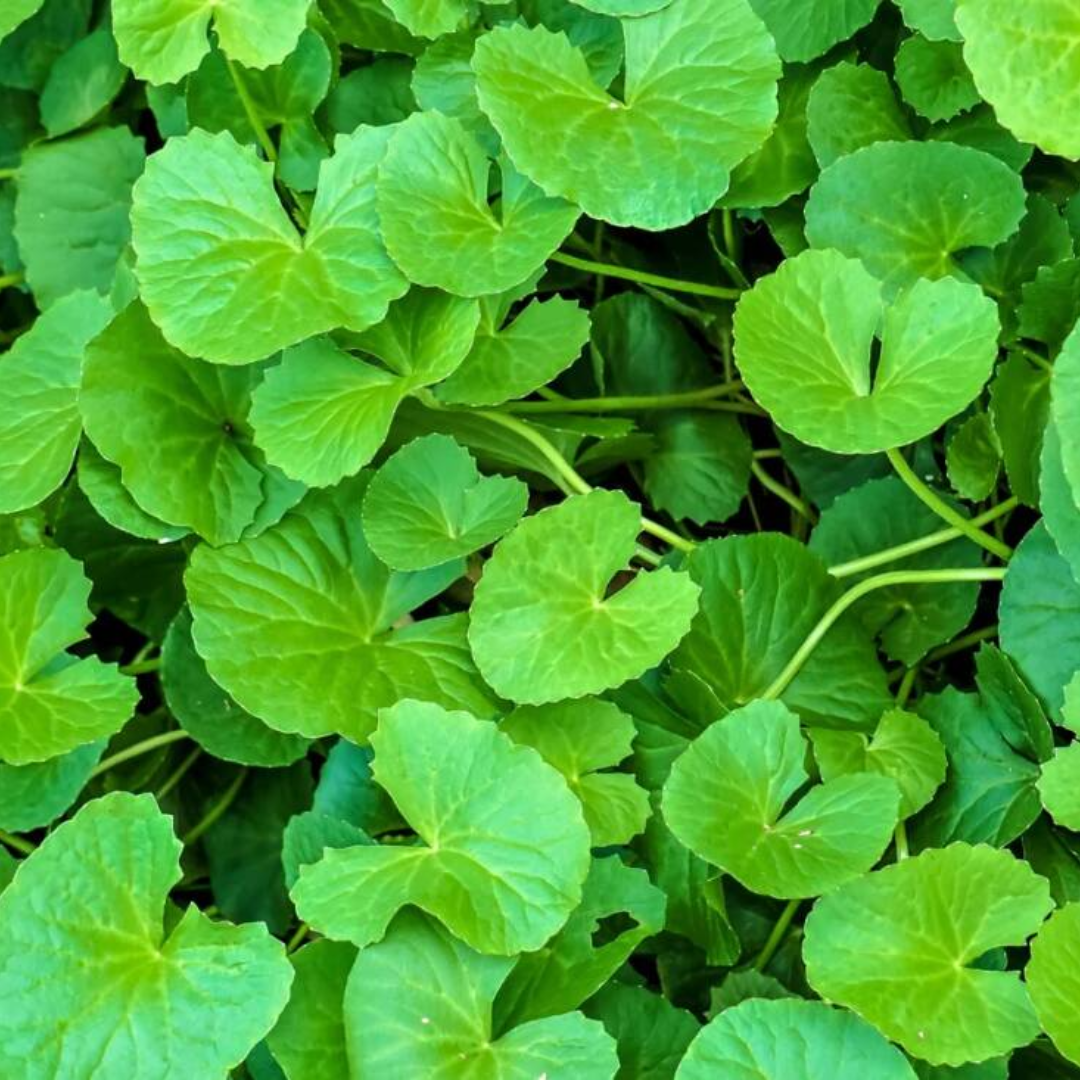
Gotu Kola in Skin Care: A Herbalist's Critique of the Reductionist View of Centella Asiatica
Recently I got a chance to listen to a short lecture on gotu kola (Centella asiatica), delivered by representatives of a global cosmetic ingredients manufacturing company. The popularity of gotu ko...
Read more